Wednesday, February 13, 2013

Is Sustainable-Labeled Seafood Really Sustainable?

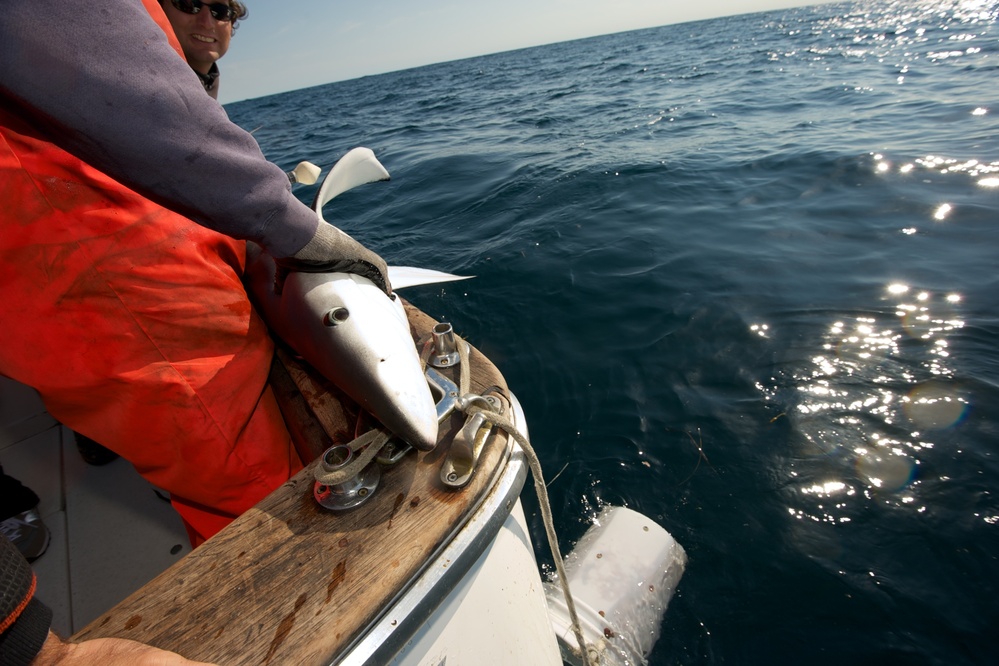
Capt. Art Gaeten holds a blue shark that was caught during a research trip in Nova Scotia. Scientists are studying the impact of swordfish fishing methods on the shark population.

Dean Casavechia for NPR Capt. Art Gaeten holds a blue shark that was caught during a research trip in Nova Scotia. Scientists are studying the impact of swordfish fishing methods on the shark population. Capt. Art Gaeten holds a blue shark that was caught during a research trip in Nova Scotia. Scientists are studying the impact of swordfish fishing methods on the shark population.
Dean Casavechia for NPR

Part one of a three-part series.

Rebecca Weel pushes a baby stroller with her 18-month-old up to the seafood case at Whole Foods, near ground zero in New York. As she peers at shiny fillets of salmon, halibut and Chilean sea bass labeled "certified sustainable," Weel believes that if she purchases this seafood, she will help protect the world's oceans from overfishing.

But some leading environmentalists have a different take: Consumers like Weel are being misled by a global program that amounts to "greenwashing" — a strategy that makes consumers think they are protecting the planet, when actually they are not.

At Whole Foods, the seafood counter displays blue labels from the Marine Stewardship Council (MSC), an international, nonprofit organization. The MSC is a prime example of an economic trend: Private groups, not the government, are telling consumers what is good or bad for the environment. The MSC says its label guarantees that the wild seafood was caught using methods that do not deplete the natural supply. It also guarantees that fishing companies do not cause serious harm to other life in the sea, from coral to dolphins.

The idea is spreading fast throughout the food industry. Megachains like Target, Costco and Kroger are selling seafood with the MSC label. McDonald's says you are munching on "certified sustainable" wild Alaskan pollock every time you eat a Filet-O-Fish sandwich. The fast-food company has used MSC-certified fish since 2007 in the U.S., and as of February, they are putting the MSC logo on their fish sandwich boxes.

Poll results from a recent survey of 3,000 Americans, conducted on behalf of NPR, by Truven Health Analytics. Questions were asked — in general — about sustainable seafood and labeling.

Consumer Poll About Sustainability

Consumers like Weel say the labels help them feel better about the products they buy. "I want to feel that I'm doing the right thing," says Weel, a pediatrician, as her 4 ½-year-old daughter bolts into the vegetable aisle in neon-colored boots. When Weel shops for seafood, she says, she wants to make choices "that will help preserve the wild fish populations in the oceans."

Executives at Whole Foods say they are helping consumers do exactly that, by pledging in recent years to sell as many MSC-certified products as possible. Seafood is the last major food that people catch in the wild, and "we can't just go out and find more fish to catch," says Carrie Brownstein, global seafood quality standards coordinator for Whole Foods.

Brownstein cites a 2012 United Nations report that warned that almost 30 percent of the world's wild fisheries are "overexploited," and more than 57 percent of wild fisheries are "at or very close" to the limit.

Other groups have devised ranking systems for seafood. The Monterey Bay Aquarium labels products like a traffic light — green, yellow or red — to urge shoppers to buy or avoid a particular fish. The Blue Ocean Institute has a similar system. The MSC reports it has labeled roughly 8 percent of the global seafood catch, worth more than $3 billion. That makes it the most widespread and best-known rating scheme around the world.

A recent survey of 3,000 Americans, conducted on behalf of NPR, suggests that a majority of consumers want to feel good about the seafood they buy. The poll by Truven Health Analytics found that almost 80 percent of the people who eat seafood regularly said it is "important" or "very important" that their seafood is sustainably caught.

If they buy MSC-labeled seafood, they may be paying a premium. Brownstein says Whole Foods charges more for some of its seafood labeled "certified sustainable," although she wouldn't give numbers. Some fishing industry executives told NPR that they are getting roughly 10 percent more for their MSC-labeled products than for seafood that's not certified sustainable.

That's one reason why many environmentalists who supported the MSC in the past say you might be troubled to know what the MSC and supermarkets like Whole Foods are not telling you:

"We would prefer they didn't use the word sustainable," says Gerry Leape, an oceans specialist at the Pew Environment Group, one of the major foundations working on oceans policies. Leape has supported the MSC for more than a decade as a member of its advisory Stakeholder Council.

But he and other critics say that the MSC system has been certifying some fisheries despite evidence that the target fish are in trouble, or that the fishing industry is harming the environment. And critics say the MSC system has certified other fisheries as sustainable even though there is not enough evidence to know how they are affecting the environment.

When a customer sees the MSC's sustainable label at the supermarket, "the consumer looks at the fish and says, 'Oh, it has the label on it, it must be sustainable,' " Leape says. "And in some fisheries that the MSC has certified, that's not necessarily the case."

Biologist Susanna Fuller, co-director of marine programs at Canada's Ecology Action Centre, agrees. "We know ... that blue stamp doesn't mean that you're sustainable," she says. When asked if consumers should choose MSC-labeled seafood, Fuller pauses. "It's a gamble," she says.

Still, even the MSC's sharpest critics say they support the broad ideas behind the organization and its stated goals.

"Originally I thought it was a good idea," says Jim Barnes, director of the Antarctic and Southern Ocean Coalition, a network of dozens of environmental groups around the world. "The world needed something like this to help steer consumer decisions, and so I wasn't against it at all at the beginning. And I'm not totally against it now." But Barnes worries that the MSC is straying from its mission and needs a dramatic overhaul. "It can be a force for good. If it continues on the path that it's on, however, and doesn't solve a lot of these issues that have been raised," he says, "I don't think it will be."

Protecting The Oceans And The Bottom Line

The MSC was born because of a crisis.

Michael Sutton, one of its founders, says that he and his colleagues dreamed up the idea after the cod industry collapsed off the Nova Scotia coast in 1992. Cod fishing had been the foundation of the region's economy and culture, worth an estimated $700 million each year. But when the cod population plunged to a fraction of previous levels, the Canadian government banned cod fishing — putting thousands of people out of work.

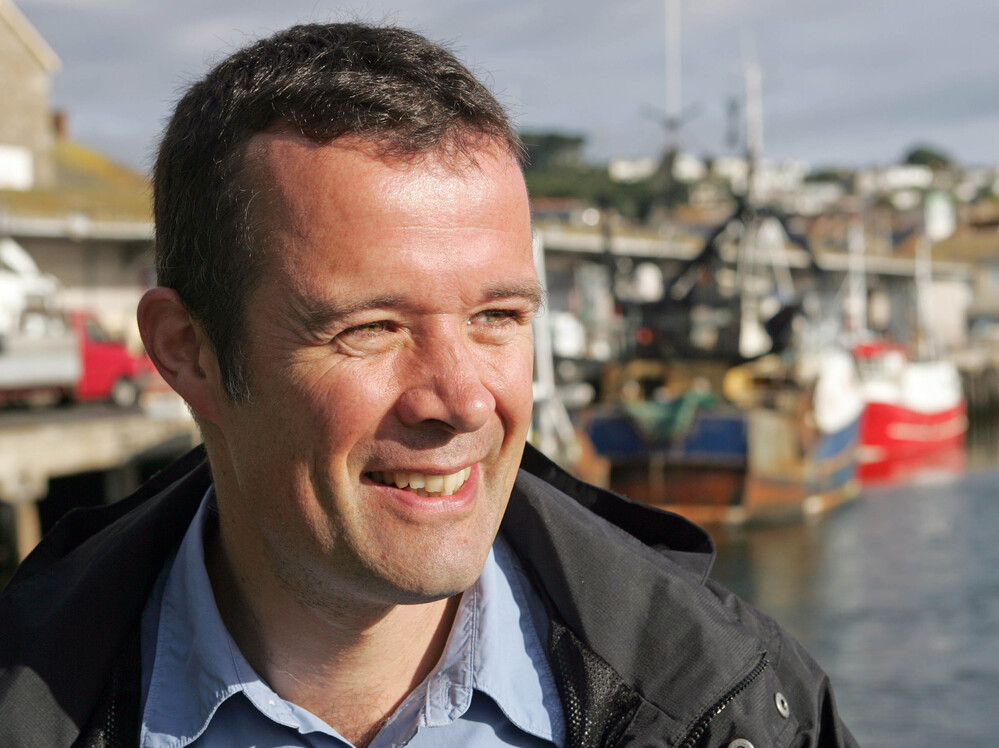
Rupert Howes is CEO of the Marine Stewardship Council. "We want to see the global oceans transformed onto a sustainable basis," he tells NPR.

Tim Lofthouse/Courtesy of the Marine Stewardship Council Rupert Howes is CEO of the Marine Stewardship Council. "We want to see the global oceans transformed onto a sustainable basis," he tells NPR. Rupert Howes is CEO of the Marine Stewardship Council. "We want to see the global oceans transformed onto a sustainable basis," he tells NPR.
Tim Lofthouse/Courtesy of the Marine Stewardship Council

"It was so bad in some of these coastal communities, the government had to send in suicide-prevention teams," recalls Sutton, who was then vice president of the World Wildlife Fund. "We were not only trashing our marine environment, but we were ruining the character of coastal communities that had existed on fisheries for centuries," Sutton says.

Sutton and other environmental advocates, and many scientists, warned that the cod collapse taught the world a sobering lesson: Government agencies that were supposed to monitor and regulate fishing were often doing a lousy job. Cod weren't the only fish in trouble. Studies showed that populations of major species like swordfish, marlin and tuna were plunging too. "So we needed to do something drastic," Sutton says.

He and colleagues decided to convince industry executives that protecting the oceans would also protect their bottom line. Sutton made a pilgrimage to the Unilever conglomerate, then one of the largest producers of frozen seafood — including fish sticks.

"My pitch to Unilever was, 'The future of their frozen fish business is at stake,' " Sutton remembers. "Overfishing is not only bad for the environment, but it's really bad for business, because it means that they're not going to have fish in the future the way they have them today."

Unilever and the World Wildlife Fund joined hands in 1997, and set up the MSC. Unilever eventually sold its seafood subsidiary and left the program, but the founding partner left its mark: From the day the MSC opened its doors in London, it has been a balancing act between industry and the environment.

Today, the MSC has more than 100 employees worldwide, including about 60 at its headquarters in a renovated building down the street from St. Paul's Cathedral.

"MSC has a global vision," says Rupert Howes, the organization's chief executive officer. "We want to see the global oceans transformed onto a sustainable basis."

MSC's System Of Certification

Swordfish from Canada are marked with a label from the Marine Stewardship Council at a Whole Foods in Washington, D.C. The MSC says its label means the fish were caught by a sustainable fishery, but critics says it's not always so clear.

Margot Williams/NPR Swordfish from Canada are marked with a label from the Marine Stewardship Council at a Whole Foods in Washington, D.C. The MSC says its label means the fish were caught by a sustainable fishery, but critics says it's not always so clear. Swordfish from Canada are marked with a label from the Marine Stewardship Council at a Whole Foods in Washington, D.C. The MSC says its label means the fish were caught by a sustainable fishery, but critics says it's not always so clear.
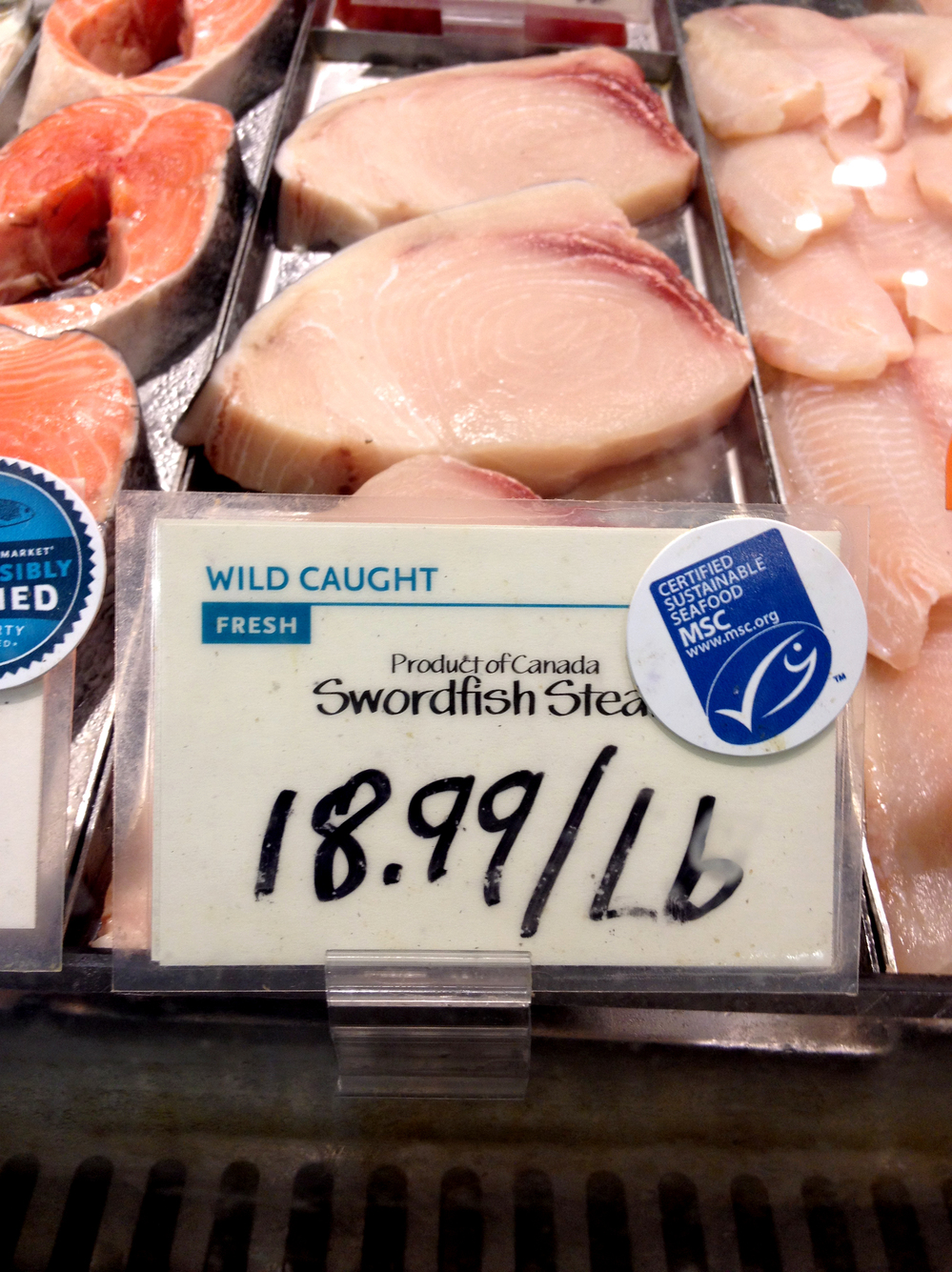
Margot Williams/NPR

Here's the MSC's basic idea: Executives of a growing number of food companies want to be "green." Some genuinely want to protect the environment; others may be mainly seeking a marketing edge. But when it comes to seafood, those executives don't have the time or knowledge to figure out which fishing companies are plundering the ocean and which ones are doing a good job. So the MSC does the work for them.

The MSC does not certify fisheries itself. Instead, a fishery that wants the label hires one of roughly a dozen commercial auditing companies to decide whether its practices comply with the MSC's definition of "sustainable." The MSC's standard for sustainability includes dozens of items, but they're designed to assess whether the population of a fishery's target species is healthy; if the fishing practices don't cause serious harm to other life in the sea — including by accidentally catching other animals, which is called bycatch; and if the fishery has good management. If the commercial auditors give the fishery a passing score, then the fishery gets the right to use the blue "Certified Sustainable Seafood" label. It can be a long and expensive process. Some certifications have taken years, and the fisheries have paid the auditing firms up to $150,000 or more.

Howes says that when a store sells MSC-certified seafood, the label announces to consumers, "We care where our fish comes from." He adds that as a growing number of food companies sell MSC-labeled seafood, executives of fisheries that don't have it are motivated to join the program. That catalyzes "real and lasting change in the way the oceans are fished," Howe says.

During the MSC's first decade, there wasn't much demand for sustainable seafood by the U.S. food industry, and the MSC "almost went bankrupt," Sutton says. And that put the spotlight on the MSC's financial model.

The way that executives structured it, MSC's budget comes partly from foundation grants. But some revenue comes from the licensing fees that MSC charges businesses for the right to sell seafood with the MSC label. So as long as many supermarket chains were not promoting it, the MSC wasn't getting much money.

Then, in 2006, everything changed. The MSC and its supporters had sent a series of delegations to Bentonville, Ark., world headquarters of Wal-Mart. The delegations helped convince Wal-Mart executives to promise that all the seafood they sell in the U.S. would be MSC-certified by 2012.

"We had to get Wal-Mart," Sutton says. "The significance of their commitment, of course, is that once Wal-Mart made a commitment to the Marine Stewardship Council, every other major retailer had to follow suit, because none of them wanted to be less progressive than Wal-Mart." Sure enough, other discount chains promised to go sustainable, too. "Overnight, the demand far outstripped the supply," says Sutton, "and so the suppliers had to catch up."

Since Wal-Mart made its pledge in 2006, the MSC system has certified seven times as many fisheries as it did during the same period before, according to NPR's analysis. Still, the MSC system has not been able to certify enough seafood for Wal-Mart to meet its 2012 deadline, according to Wal-Mart senior buyer Bob Fields.

The explosion in sales of MSC-labeled products at leading chain stores has transformed the organization's finances. The year that Wal-Mart pledged to promote MSC-labeled seafood, the MSC received most of its income from foundation grants — 75 percent, according to the MSC annual report. Meanwhile, it received only 7 percent of its income from label licensing fees.

Today, those licensing fees generate more than half of the MSC's revenue.

And since Wal-Mart executives embraced sustainable seafood, the MSC has also received millions of dollars in grant money from the Walton Family Foundation, which was created by Wal-Mart's founder and is governed by his descendants. The Walton Family Foundation has become one of the MSC's largest donors, according to financial reports. The director of the foundation's environment programs, Scott Burns, served on the MSC's board of directors before he went to Walton.

Marine Stewardship Council fisheries, by year

Critics say that the day Wal-Mart embraced sustainable seafood, it was a blessing for the MSC system — and a curse. The critics charge that the MSC system has compromised its standards to keep up with the booming demand from Wal-Mart and other chains that followed suit. Fuller, of the Ecology Action Centre, says she has watched the MSC system "struggling with meeting the demands of the system that they helped create ... They have ended up having to lower the bar."

When ocean specialist Daniel Pauly, a fisheries professor at the University of British Columbia, talks about the MSC today, he sounds dispirited. Pauly took part in early meetings in London that helped create the MSC and now says he has lost faith in the system. "The MSC is doing the business of the business community," Pauly says, not the environment.

Capt. Art Gaeten holds a blue shark caught off the coast of Nova Scotia during a research outing. Studies show that 35 percent of sharks caught by swordfish boats die either on the hook or within days of release.

Capt. Art Gaeten holds a blue shark caught off the coast of Nova Scotia during a research outing. Studies show that 35 percent of sharks caught by swordfish boats die either on the hook or within days of release.

Dean Casavechia for NPR

Balancing 'Sustainable' Swordfish With At-Risk Sharks

Some environmentalists and scientists say if you want to understand why they're losing faith in the MSC, look at the battle over certifying Canadian swordfish. Next time you buy swordfish at a store like Whole Foods, it might come from a controversial fishery off the coast of Nova Scotia.

Fishermen have known for ages that when they go swordfishing in some parts of the Atlantic, they will accidentally catch sharks — lots of sharks, says Steve Campana, who runs the Canadian government's Shark Research Laboratory, near Halifax, Nova Scotia.

Steve Campana runs the Canadian Shark Research Laboratory. He works to tag sharks with satellite transmitters to find out how long they survive after being caught and released.

Dean Casavechia for NPR Steve Campana runs the Canadian Shark Research Laboratory. He works to tag sharks with satellite transmitters to find out how long they survive after being caught and released. Steve Campana runs the Canadian Shark Research Laboratory. He works to tag sharks with satellite transmitters to find out how long they survive after being caught and released.
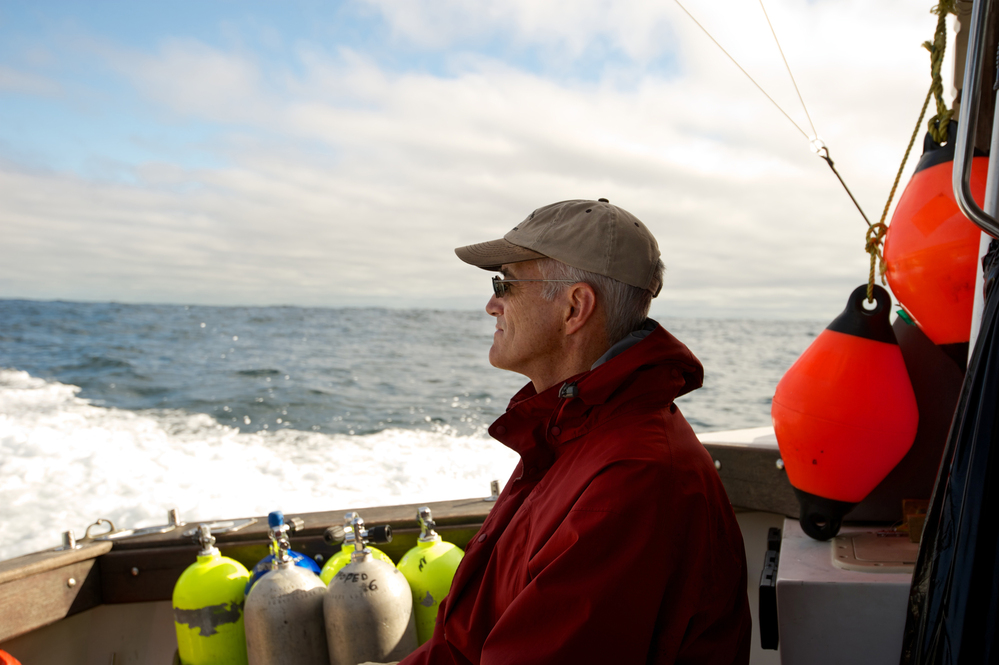
Dean Casavechia for NPR

When NPR caught up with Campana one morning, he and his research crew were heading into the Atlantic on a 34-foot trawler, the Dig It. They were planning to attach sophisticated satellite transmitters to blue sharks.

"On average, from what we've seen over the years, the swordfishermen catch about five blue sharks for every one swordfish," Campana said, holding onto a metal strut as the Dig It bounced through the waves. Add it up, studies suggest, and Canada's long-line swordfish boats — so named because they typically let out 30 or 40 miles of fishing line, dangling more than 1,000 hooks — accidentally catch tens of thousands of sharks every year.

This touches on one of MSC's three fundamental rules, even though studies show swordfish are plentiful. The second rule says that a fishery is not sustainable if it does not maintain "the integrity of ecosystems" — which means, in part, that it's not sustainable if there is too much bycatch.

The Committee on the Status of Endangered Wildlife in Canada, which is funded and appointed by the Canadian government, has warned that the main kinds of sharks that swordfishermen accidentally catch are "threatened" or "endangered" or "of special concern."

Swordfishermen generally release the sharks. But there had been few studies on what happens to those sharks after fishermen let them off the hooks — until Campana and his colleagues came along. About six years ago, they started tagging sharks with satellite transmitters before fishermen set them free.

Shark charter operator Art Gaeten (right) and recreational shark fisherman Shawn Knowles struggle to hold a blue shark in position while shark biologist Anna Dorey attaches a satellite tag to its back. Researchers say about five blue sharks are caught for every one swordfish. Scientists are trying to determine what happens to the sharks after they are released.

Dean Casavechia for NPR Shark charter operator Art Gaeten (right) and recreational shark fisherman Shawn Knowles struggle to hold a blue shark in position while shark biologist Anna Dorey attaches a satellite tag to its back. Researchers say about five blue sharks are caught for every one swordfish. Scientists are trying to determine what happens to the sharks after they are released. Shark charter operator Art Gaeten (right) and recreational shark fisherman Shawn Knowles struggle to hold a blue shark in position while shark biologist Anna Dorey attaches a satellite tag to its back. Researchers say about five blue sharks are caught for every one swordfish. Scientists are trying to determine what happens to the sharks after they are released.
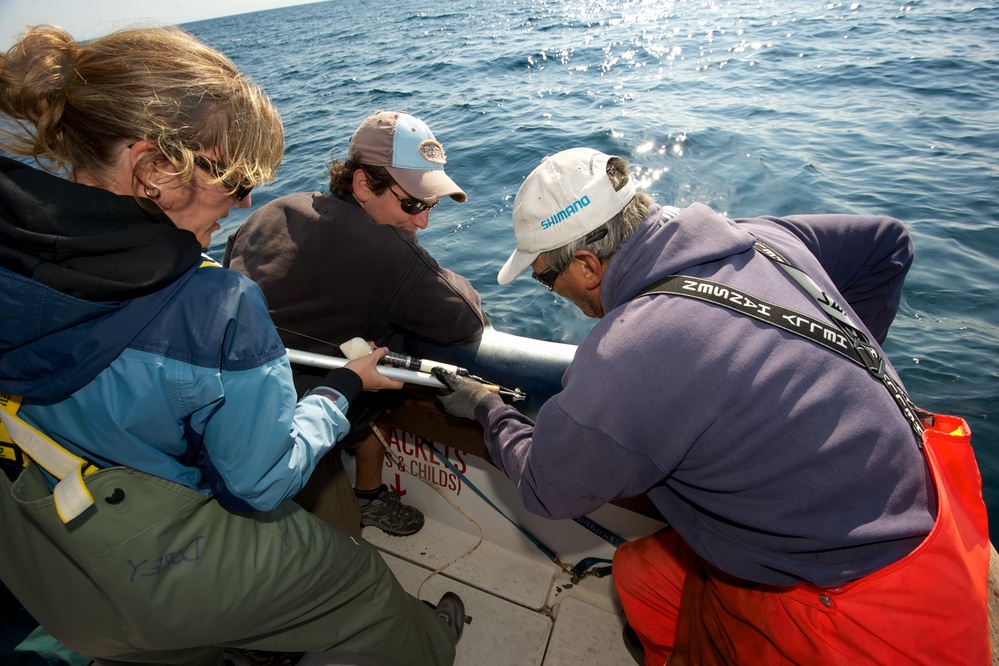
Dean Casavechia for NPR

During one outing, the crew showed how they do it: They snagged a 5-foot blue shark on a hook baited with mackerel, reeled it in, and then pinned the thrashing shark against the boat's broad, flat railing. They jabbed a satellite transmitter, which looks like a turkey baster with a barb on one end, into the shark's leathery skin.

And then they let the shark go, the transmitter protruding like an unsightly growth. The device is equipped with a computer chip that records data every 10 seconds, including where the shark goes, how deep it goes, and how long it stays there. After about 10 months, the tube pops off the shark and floats to the surface, beaming all the information via satellite to Campana. When the transmitter shows that a shark went to the deepest part of the sea and just stayed there, Campana knows when and where the shark died.

Campana and his colleagues published some of their first findings based on these studies in July 2009, in the journal Marine Ecology Progress Series. Their studies showed that up to 35 percent of the sharks caught by swordfish boats die, either right on the hook or within days after the fishermen set them free. The findings suggested that Canadian swordfish boats accidentally kill almost two sharks for every swordfish they catch.

Campana says that when you put these findings in context, it is troubling. Other studies suggest that the populations of major kinds of sharks in the North Atlantic have plunged as much as 40 to 60 percent in just the past few decades. "Any time you see consistent declines like that, and the fact that all of these large sharks seem to have declined all over the world," Campana says, "it's just a worrisome pattern."

The president of Canada's swordfish industry, the Nova Scotia Swordsfishermen's Association, dismisses Campana's conclusions. Campana's report on shark deaths could not have come at a worse time for Canada's swordfish industry. Only months before the report was published, the association, which catches most of Canada's commercial swordfish, had applied to the MSC for certification. The industry sells much of its swordfish to Whole Foods and other stores in the U.S.

Those conclusions "were not close to what the industry felt was reality," Troy Atkinson, president of the association, says while sitting in his store, crammed with giant spools of plastic fishing line and boxes of heavy metal hooks. He runs the main business that supplies equipment to Canada's swordfishing fleet.

"We're sometimes portrayed as a bunch of cowboys out to harvest the last buffalo," he says. "We're portrayed as some of the worst in the world. And it's just not correct."

Atkinson cites reports by other researchers that conclude that the population of blue sharks off the coast of Canada is healthy – especially reports by the International Commission for the Conservation of Atlantic Tunas (ICCAT), which represents dozens of governments whose nations fish the Atlantic. So, Atkinson says, Canada's swordfishermen could catch and kill even more sharks without hurting the environment.

Other studies suggest the evidence is contradictory, and that scientists don't know for sure what is happening to sharks across the Atlantic. For example, the optimistic ICCAT researchers whom Atkinson cites acknowledge that their conclusions are "highly uncertain" because they're based on unproven assumptions and incomplete data. However, studies showing that blue sharks have sharply declined focus on a limited region.

So scientists and environmentalists were dumbfounded in early 2012 when the MSC system decided that Canada's swordfish industry can use the label "Certified Sustainable Seafood."

"That is absolutely the kind of fishery that should not be certified," says Leape of Pew Environment Group. "That fishery is outrageous."

Certifying Canadian swordfish "is the worst thing they can do, says Fuller, of the Ecology Action Centre. "That is not at all the way it should go."

A Program Based On 'Science And Evidence'

The Ecology Action Centre and dozens of other environmental groups denounced the MSC. The groups said in a letter to the MSC system that roughly 10 percent of Canada's swordfish are caught with harpoons — a method environmentalists support because there is hardly any bycatch. But the long-line boats that supply most of the swordfish catch a "staggering" number of sharks, as the environmentalists put it. "Certifying [Canada's long-line swordfish boats] compromises the credibility of the MSC," the groups warned, "and the sustainable seafood movement as a whole."

Additional studies and information on sustainable fishing and labeling.

Howes, from the MSC, disagrees. He says the controversy over Canadian swordfish "illustrates a key feature of the MSC program, which is the fact that the program is premised on science and evidence. That fishery has met the MSC standard."

The analysts who evaluated the fishery for the MSC system agreed that the swordfish boats do kill large numbers of sharks. They acknowledged that the optimistic studies on sharks that the swordfish industry cites are uncertain, but they concluded that the weight of evidence suggests it is "highly likely" there are plenty of blue sharks left in the sea. The analysts also stressed that, by all accounts, other countries kill far more sharks than Canada's swordfishermen do. So, they said, Canada causes only a small part of the bycatch problem.

"We are not saying that shark bycatch doesn't matter," says Howes. "What we're saying implicit within the labeling of that fishery is, the shark bycatch of that unique individual certified fishery is safe. It's within ecological limits."

Barnes, of the Antarctic and Southern Ocean Coalition, says the controversy over Canadian swordfish illustrates why the booming demand for sustainable seafood actually threatens to hurt the movement more than help it. "The bottom line is that there are not enough truly sustainable fisheries on the earth to sustain the demand," Barnes says. "The retailers and wholesalers all want access to this kind of label because they're trying to ... make money with their consumers. There's nothing wrong with that; that's how the world works."

But Barnes charges that the MSC is labeling some fisheries as sustainable — even when they are not — partly to fill the seafood counters at Wal-Mart and other large chains. "I'm not down on Wal-Mart at all, don't get me wrong," he says. "But to get on line with big chains as your goal leads you down a path that I don't think the originators of the MSC intended."

Howes could hardly disagree more. "If you really want to contribute to the transformation of our economic systems more generally, you've got to engage with the big guys. And therefore, I absolutely welcome Wal-Mart's commitment," he says. "That will drive change."

Howes continues: "Will that overload the MSC system? No."

He argues that there's no way the MSC could label problem fisheries sustainable just to satisfy demand, because, he says, the certifiers evaluate each fishery based only on scientific evidence. But he adds, "We want to see oceans fished sustainably forever. We're not going to achieve that by becoming a small niche organization that engages with a handful of perfect fisheries."

Researcher Barbara Van Woerkom contributed to this story.


View the original article here

Gas, Oil Booms Bring Complications To Small Towns

John McChesney, former director of the Rural West Initiative, Bill Lane Center for the American West, Stanford University

Ann Chambers Noble, historian and longtime resident of Pinedale, Wyo.

The discovery of oil and natural gas in Wyoming, Colorado and North Dakota has created a new generation of boomtowns. The explosive growth generated by the oil and gas drilling is often accompanied by an influx of new labor. The small towns near the fields wrestle to balance the economic advantages of the boom with the dramatic changes it brings to these tight-knit communities.

Copyright © 2013 NPR. For personal, noncommercial use only. See Terms of Use. For other uses, prior permission required.

NEAL CONAN, HOST:

This is TALK OF THE NATION. I'm Neal Conan in Washington. There's a new generation of boom towns across the American West sparked by the explosive growth of oil and natural gas. When these industries move in, small towns near the fields change almost overnight. Once-sleepy main streets suddenly boast improved schools, libraries and community centers. Quiet rural airports expand to take corporate jets. Restaurants and motels and hardware stores all thrive.

But the infusion of cash doesn't come without complications. Outsiders double or triple the population. Service industries include prostitution and drugs. The air and water can suffer. And then what happens when the wells run dry?

If you've lived in a boom town, we want to hear from you. Give us a call, 800-989-8255. Email talk@npr.org. You can also join the conversation on our website. That's at npr.org. Click on TALK OF THE NATION. Later in the program, we continue our Oscar docs series. "The Invisible War" focuses on sexual assault in the U.S. military.

But first boom towns. Ann Chambers Noble is a longtime resident of Pinedale, on the edge of the gas fields in Wyoming's Green River Valley. She documented the town's history for a book on Pinedale's centennial and joins us now by phone from Rock Springs. Good to have you with us today.

ANN CHAMBERS NOBLE: Well, thank you very much for having me.

CONAN: And is there one moment for you that captures the rapid change that you saw in Pinedale?

NOBLE: Well, it did seem to happen awfully fast. And it was in about 2000, the year 2000 - our sleepy, quiet, dusty, isolated little cow town was changed really rather rapidly and stayed changed for several years, well over the decade.

CONAN: Well, what happened, for example?

NOBLE: Well, I think before - I'm going to give you a quick geography lesson that our county, for which this gas boom occurred, is Sublette County, and it is almost the size of Connecticut. So we're talking a very big, very isolated mountainous area in western Wyoming. And in this county, just before the boom, there were only about 6,000 people living there, half of them divided between two towns, Big Piney in the South and Pinedale in the North, and the rest of them were like myself and my family, on isolated little cattle ranches.

So when you only have 6,000 people in that kind of space, and when you suddenly double and triple the population, it has a huge impact on absolutely everything: our schools, our medical clinics, our streets, our housing. And it was a very stressful time.

CONAN: You raised four children in Pinedale. Tell us about some of the changes to the school.

NOBLE: Well, they were all girls, and when they were real little, they believed, and they did, live in a very, very safe community, very safe town, and they knew they could walk anywhere at any time, and it was never a problem. But when as a parent all of a sudden your children are about middle school or high school, and there's a tremendous amount of usually men coming to the community from different parts of the country, you're not sure you want your daughters walking all over town at any time.

Well, I also though refer to this time in our history, and it has ended, we - one thing about a boom, there is always a bust, and we're in the bust now, is that I always stole a line from Charles Dickens that it was the best of times and it was the worst of times.

The best of times is referring to the money and the jobs that were available It's nice to live in a community when you can have all the money you want. We have beautiful facilities, beautiful schools. And in the classroom are smartboards, every kid has a computer, our wonderful hot lunches cost us 50 cents, our breakfasts were 25 cents. And we're not on any aid, this is just the school covering everything for us because they have plenty of money. And we were paying our teachers very, very high salaries.

The downside was those teachers were really earning absolutely every extra penny they were earning because the classroom setting was perpetually changing. Every week there were new kids coming in, other kids leaving out. The population was constantly in transition during - for years, all through the 2000s.

And that's hard on us old-timers, that's hard on those new kids, and that's got to be very hard on those teachers.

CONAN: We're talking about boom towns. If you've lived in one, give us a call. Tell us what happened to your town, 800-989-8255. Email us talk@npr.org. Let's go to Scott, Scott's on the line with us from Fairbanks.

SCOTT: Yeah, hello.

CONAN: Hi.

SCOTT: Yeah, I've been here nine years. You know, I didn't live through the boom of the - building an oil pipeline, but I've sort of seen the aftermath. And, you know, what happens is that all the, you know, salaries are raised to get people to move up here, and then, you know, when the boom ends, you know, people - the state has to figure out how to attract people in the university and the hospitals without the same wage level.

And then the downtowns - the downtown of Fairbanks has really suffered. You know, you have all this infrastructure, a lot of it's vacant or rundown, and you've got to figure out what to do with abandoned buildings, and you're still paying, you know, for services on those things, but the city is left with a big price tag.

And it can hurt, you know, the local government. Even though you enjoyed a big tax base for a while, it can really hurt in the aftermath.

CONAN: I visited Fairbanks just last summer, and you're right, the downtown area, it looks like - a lot of shuttered storefronts.

SCOTT: Yeah, that's exactly right. So there's got to be - you know, the boom is great, but there has to be a lot of planning by the city fathers and mothers to make sure that they put money away and decide what's going to happen after the boom has passed.

CONAN: Well, thanks very much for the call, appreciate it. Ann Chambers Noble, any indication the powers that be in Pinedale have done that kind of planning?

NOBLE: I do have to take hats off to our government leaders, all the way from the mayor to the county commissioners to the governor. Our governor during the boom, Dave Freudenthal, visited all of the communities and really pushed us hard to be pro-active about this boom that was coming, to be proactive rather than reactive.

And hats off to, for instance, our county commissioners that built all these beautiful big structures. At the time they were making the budgets for building these - our buildings, they at the same time put in at least a 30-year maintenance fund for them. So we fortunately, because of the great leadership from the state all the way down to the mayors, we did put in some good safety belts for that.

But our whole state history has been boom and bust. So we've had a little bit of practice at this. Not Pinedale, but at least we tried to learn from our neighboring towns.

CONAN: Our former NPR colleague John McChesney recently stepped down as director of the Rural West Initiative at Stanford's Bill Lane Center for the American West, where he reported and wrote about boom towns. He joins us now from member station KRCB in Rohnert Park, California. John, nice to have you on the program. John, are you there? I guess we're going to try to re-establish contact with John McChesney at KRCB and see if we can get him set up and get him on the program.

Let's see if we get another caller in on the conversation. John's on the line, John with us from Rapid City.

JOHN: Hi, great to be on the program. It's kind of deja vu all over again with the oil boom in Williston. I lived there back in late '70s, early '80s, during the last boom, and I remember there being these large fields that used to hold trailer house complexes now being empty and kids in high school racing up and down the streets; there were no speed limits.

Apartment buildings that were, I mean row after row of apartment buildings that were abandoned and were later bulldozed because of the shoddy construction work. I'm kind of thinking, you know, is all that going to happen again in Williston?

CONAN: Well, have you been out there recently? Is it - is the building quality the same?

JOHN: You know, I was up there just last summer, and I didn't get off to see any of the additional apartment buildings that were built, but the growth was exponential, the traffic was frightening. And it was just - there was, like, shades of deja vu all over again.

CONAN: Well, thanks very much, we'll have to see what happens there in Williston. And Ann Chambers Noble, in Pinedale, part of the package that, along with the boom, came a lot of environmental damage.

NOBLE: Yeah, that was probably the hardest for us locals to accept. There is the immediate doubling of the population that was scary enough to deal with, but you could try to at least handle that. But when it really got scary for many of us is when our air quality became very, very poor. In fact we had ozone levels that matched really the poorest of inner city like Los Angeles. And it was very dangerous.

And we didn't quite know how to handle it. Do you not let your kids go to ski practice because breathing in this air is very bad when we live in these pristine mountains? And that was probably some of the hardest part to deal with.

And then there was also lots of concerns, which we still don't even know the effects yet, of whether all of this quick drilling, massive drilling, what impact it had on our water as well. I mean we're in the headwaters of the Green River. We're in the most pristine environmental part of the world, and yet we were horrendously impacted in the environment because of all this drilling.

CONAN: And that's the controversy over fracking, not just there in and around Pinedale, but of course up in North Dakota as well. I think John McChesney, is on the line with us. John, are you there?

JOHN MCCHESNEY: I hope so.

CONAN: Good to talk to you again. Hi John, how are you doing?

MCCHESNEY: Hi.

CONAN: We've had - as Ann Chambers Noble was saying, this is a long history of boom and bust, not just in Wyoming but throughout the American West, and depending on the industry, well, gold towns turned into ghost towns. And what's different about this round?

MCCHESNEY: Well, let's talk about North Dakota because North Dakota is a little different from what's going on right now in Wyoming. People in North Dakota think this new horizontal drilling and fracking boom up there is going to last 20 or 30 years. You have to re-frack these wells over and over again.

So normally you go through a place, a point where you stick a straw in the ground and suck oil out, and then it goes away, the production goes way down. But up in North Dakota they're expecting this to last for a considerable period of time, 20 to 30 years.

Now, no one really knows whether that's going to happen. If the price of oil drops below 70 or 60 dollars a barrel, the enthusiasm for drilling up there may drop off. But what happens in these situations is there's no forward planning ahead of time.

People in these areas know that drilling's going to happen, and you'll find very few people who are just totally opposed to drilling there. What you do find is: Why can't we plan ahead? Why can't we pace this so that the local governments can adjust themselves to the impact? And that doesn't happen.

Over and over and over again, everything, as Ann said, is overwhelmed. Local governments, what used to be part-time jobs suddenly become, you know, 12-hour-a-day jobs. And there's no pay for that. Schools are overwhelmed not only in terms of the number of students, but the wages that teachers earn are not commensurate with the rents that are in the area.

Schools up in North Dakota are thinking about building their own housing now in order to compete with the housing prices that the oil boom has created. Health care systems are overwhelmed. They're not only overwhelmed by numbers and the horrendous accidents that happen when an 18-wheeler chews up a passenger vehicle, which happens all the time in North Dakota, they're overwhelmed by bad debt.

The folks who move in there don't have permanent addresses, they don't have - they only have cell phones. I talked to...

CONAN: John? We have to take a short break, John. We'll have more with you and with Ann Chambers Noble in just a minute. Stay with us. This is NPR News.

(SOUNDBITE OF MUSIC)

CONAN: This is TALK OF THE NATION from NPR News; I'm Neal Conan. This hour we're talking boom towns, oil and gas. These days, they're mostly the result of oil and gas discoveries. It's hardly a new concept, though. The Western gold rush in the mid- to late 1800s produced a number of boom towns like Bodie, California.

That little town in the Sierra Nevadas was formed in 1861 after William S. Bodey discovered gold. Miners didn't find much else until 1875, when a cave-in revealed a rich vein of ore. The rush was on, and Bodie's population swelled with families, miners, entrepreneurs, crooks and prostitutes. Then it was known as the most lawless, wildest and toughest mining camp the far West has ever known.

But two fires wiped out much of the town, and now Bodie is one of America's most famous ghost towns. If you've lived in a boom town, we want to hear from you. Give us a call, 800-989-8255. Email us, talk@npr.org. You can also join the conversation on our website. That's at npr.org. Click on TALK OF THE NATION.

John McChesney, who just stepped down as director of the Rural West Initiative; and Ann Chambers Noble, author of "Pinedale, Wyoming: A Centennial History" are our guests.

I wanted to read this email we got from Bob in Seattle: I'm an experienced truck driver. I've heard about the job market in North Dakota for years. I was interested in working there but decided not to. That's the thing for me: What about winters there? What's the working conditions - the working conditions like? It would be one thing if after working there for five years I could retire at age 44, but that's not how it works.

Further, the cost of living is a big issue. A well-paying job working 70 hours a week that also comes with a very high cost of living still makes you poor. Why would I want to be poor? The same things apply to workers that earn less than truck drivers, like those working at McDonald's or cleaning people. What's the quality of life for them?

And John McChesney, you hear about these fabulous job opportunities in places like North Dakota. Is Bob right, or is it less than what it looks like?

MCCHESNEY: Well, I think there are fabulous job opportunities there and especially for truck drivers, but you're going to have to live in rather austere circumstances, probably in a man camp or - you know, which is temporary housing, where you live with a lot of male drivers and male oil workers. And the wages are good, and you can probably put money away.

The roads are terrible. The chances of accidents are very high. The hospitals are overburdened with accidents between 18-wheelers and passenger cars. So there's a - it's a mixed bag, but basically you can make good money there driving.

CONAN: Let's see if we can get another caller in. This is Teresa(ph), Teresa from Beaufort, South Carolina.

TERESA: Yes, hello, thank you. I lived in Pinedale for 17 years. I left it six years specifically because of the boom. It was - it hurt, Tom(ph), it just hurt. The nature - things - the degradation that I saw, there was a 13-to-one ratio of men to women with the man camps that came in. They're not just - they weren't, when I left, temporary structures. They're still up.

There was a huge - we called it big brown cloud that just, as I think was mentioned, the pollution that just never went away. The intrinsic beauty of the place was to me being raped and pillaged. Every day I watched an oil rig, another one, go up in the mesa and the roads and the trucks. And it was endless and ceaseless. It never stopped.

It was all for, I imagine, making money or the good of the country, but I who lived there did not feel that, and I left because it was not the place I knew it to be, and it would never return because once you take nature, once you tear it apart, you just can't get that back. It won't come back. And it saddens me because I really loved being in Wyoming.

And yeah, that's what I have to contribute to that. Thank you.

CONAN: All right, Teresa, thanks very much for the call. And Ann Chambers Noble, there are some of those trailer camps still around Pinedale.

NOBLE: Right. It - we have some big, beautiful, gorgeous structures as a result of the money from the gas fields, no doubt about it. But yes, there's definitely a lot of homes in foreclosures and buildings that are no longer in use. But could I just add a comment: You're talking about those wonderful high-paying jobs that the gas fields did bring to the community, and that is very true.

But that also became a huge burden for people like my husband and I, who have cattle ranches there, because we couldn't begin - we weren't getting any more for our cattle, and we couldn't begin to compete for wages with what the gas fields were paying. So we were very labor-starved. We couldn't begin to compete with the gas companies when it came to getting parts for our tractors, or if our trucks broke down, we couldn't afford - now the mechanic that used to be $50 an hour was now $200 an hour, and he was plenty busy with work out in the gas fields.

So that - those increased wages may have been great for those temporary workers, but for the local businesses, it was a huge burden, and it's one we still have not recovered from.

MCCHESNEY: And that, Neal, is true in spades up in North Dakota. The schools, the hospitals and the police and ancillary service workers cannot compete in the wage market created by an oil field. So teachers are being recruited in there and being housed - the last time I was up there, there was discussion of the schools buying housing for their teachers so that they could actually live there.

Police come in there, they've been recruited from academies across the country, they get there, and they discover they can make a lot more in the oil field than they can driving in a cruiser, and they leave. And in the hospitals, the support workers who, you know, do all the scut work in a hospital, the hospitals can't compete. It's a really difficult situation in terms of wages.

CONAN: Leanne(ph) is on the line with us from San Antonio.

LEANNE: Hi Neal, thank you for this program. Yeah, I live down in a tiny town called Falls City, right in the middle of the Eagle Ford Shale. And everything you all are saying, it's true. It's what we're living right now. And what's so frustrating to me is I say this and hear what's happening in the rest of the country, and I see it happening, but it's like the first time anyone's heard about it.

When you complain to the railroad commission about the environmental concerns, the traffic, the rent, all these costs to our little community, it's like it's the first time it's happened. And I don't understand. Why isn't there some sort of support? Where's the research, the evidence that we should use to say this has happened somewhere else? We know the chemicals are bad for our water supply, we know there's going to be air pollution.

We need help to fight. But it seemed like whatever happened in Pennsylvania doesn't apply to Texas. I just don't understand.

CONAN: And she's talking about the - some of the problems there have been with fracking in Pennsylvania and that of course it's going on in Texas, as well as in Wyoming and North Dakota and other places. John McChesney, talk about big field in California, as well, in Mendocino.

JOHN MCCHESNEY: I'm sorry, Neal, I'm having a little difficulty hearing you.

CONAN: Oh that's all right. We're just talking about the possibility not just in Texas, as Leanne was saying, and in Wyoming, which we've been talking about, North Dakota, Pennsylvania there have been problems with fracking, and they're talking now about opening a big field in California, as well.

MCCHESNEY: They are, and it's actually - there's discussion of Mendocino, but they're actually talking about a big shale formation down around Bakersfield, down in the southern San Joaquin Valley. And some people are saying that that could dwarf the Bakken up in North Dakota. So California is looking at the possibility of an oil boom, as well.

CONAN: Let's go next to Spencer(ph), Spencer on the line with us from Pinedale.

SPENCER: Hi, I just wanted to mention I've lived here in Pinedale for a few years and don't work directly in the gas industry but I actually work at the local airport, which has benefitted a lot from the increased traffic. But I've just noticed that the Pinedale area has kind of leveled off. We had the boom, but now things draw down. The community seems to be finding ways to make other income besides just the gas boom, trying to focus on tourism and use the money from the boom to make a sustainable, long-term economy.

CONAN: Ann Chambers Noble, you talked about some of the structures that Pinedale has benefited from, including the wonderful Sublette County Library there in Pinedale, and there's a beautiful aquatic center that any community would be proud to have.

NOBLE: Yes, for a community of only a couple thousand people, we have close to a $30 million aquatic center, a couple of swimming pools, beautiful indoor walking track. We have a couple of basketball fields. The best part about that, and this is definitely the upside of a boom, it's nice to live in a place that has a lot of money, is that as it - every single age group in our community benefits from that - what we call the PAC, Pinedale Aquatic Center.

There's day - in the morning, it's full of people that are 60 and older. We'll have our geriatric groups in there walking every day, and yet it's also full of preschoolers. Our school kids use it constantly. It's a wonderful facility that we have all benefited, and that never would have been possible without the boom.

And especially this time of year, you know, seven months of the year, we're in snow cover, and if you want to be able to exercise, you - if you're not on skis, you need to be inside.

CONAN: But are you going to be able to sustain that when the economy, if as people say, the boom flattens out and begins to ebb away, and the fields start drying up, with a tourist economy and with cattle ranching as Pinedale used to have?

NOBLE: Well, it's definitely already slowed down. We are definitely seeing the results of a bust, and we are seeing budget cuts, no doubt about it. I was telling someone just recently, my freshman in high school this year brought home for the first time ever a supply list. I had to buy her supplies for school. I've never done that. So we are beginning to see where - the decline in the income.

But as I mentioned earlier, we have some very smart city and county planners that did set money away. They found some legal way to set money away at the time the boom was at its peak to maintain these buildings. So we're not too worried about that at this point. But that was a case where we did do some planning. You could always have done more planning.

And what - an earlier caller mentioned about the importance of planning. I will say that it's very easy to say that and very difficult to do that because you don't know what you're in for. And we, in some ways, over-planned because we built this gorgeous elementary school clear out in a field that was going to be the next new neighborhood, and then the bust came. So now we have this beautiful elementary school out in the middle of nowhere with no neighborhood. So that was a case, potentially, of over-planning.

MCCHESNEY: Well, there are...

CONAN: Spencer, thank - go ahead, John.

MCCHESNEY: There are two levels of planning, and, as you know, one is what you do on the field in terms of where you drill and how you drill, and the other is the infrastructure planning that you do. And one of the Williams County supervisors up in North Dakota told me, he said when Hewlett-Packard or some big company like that comes to town, they come in and they say, we're going to need X number of houses.

We're going to need - we're going to bring in this number of students. It's a centralized operation, so it's easier to plan for. When an oil development happens, it's all over the place, and there are dozens and dozens of companies that are operating independently. So it's very hard for planners to get a grip on it and try to make it happen in a more orderly way.

But most people I've talked to said they'd much rather try to slow it down and get that orderly plan in place, rather than the rush that you've seen in North Dakota and I think you saw down in the Upper Green River Valley.

CONAN: And even in the service industries, there were motels in Pinedale and motels in Williston, main. As soon as they built it, the oil company would call and say, we will rent every room for the next three years. This doesn't teach people how to run a competitive business.

MCCHESNEY: Right. When I went to North Dakota, I had to stay in a private home. I could not find a motel room within a 100-mile radius of Williston.

CONAN: We're talking with John McChesney, just stepped down as director of the Rural West Initiative at Stanford's Bill Lane Center for the American West. Also with us, Ann Chambers Noble, historian and longtime resident of Pinedale, Wyoming. You're listening to TALK OF THE NATION from NPR News.

David's on the line with us from Willow River in Minneapolis.

DAVID: Minnesota.

CONAN: Minnesota. Go ahead.

DAVID: Yes. Yes. I worked in Williston on a frack crew for the last - for nine months last year. I was - went out in the field every day. It was 110 hours per week, two weeks straight, one week off, lived in a man camp. Two weeks ago, we buried one of my co-workers, died out there in a frack accident.

CONAN: I'm sorry to hear that.

DAVID: It was not a pretty place to work.

CONAN: I can't imagine that it was, but how was the money?

DAVID: Well, the money, it started out pretty good because we were getting well bonuses. Each well we drill that we were successful on without any sort of environmental mishap, we would receive $1,500, maybe $2,000 well bonus a month. And that was pretty much our, I would call, profit. The hourly wage was not bad, but so many hours, so we had a lot of overtime.

But I spent a lot of money driving back and forth to Minnesota, and it was a 700-mile drive, so I would spend four days driving back and forth. So I essentially had three days off per month. And eventually I broke down with anxiety. I had to see a neurologist. I - so I spent a lot of money on medical bills, and ultimately they would not reduce my hours, and I ultimately quit.

CONAN: Well, David, again, sorry to hear about your loss, and we wish you the best of luck.

DAVID: Thank you.

CONAN: Thanks very much. Let's see if we can get Nadine with us, Nadine with us from Rock Springs, Wyoming.

NADINE: Yeah. Hi.

CONAN: Hi. Go ahead, please.

NADINE: I was just calling to say that, you know, my family moved here in '71 into Rock Springs at the end of a boom, and at the end of that boom ended up with a whole generation of children coming up with alcohol and drug problems, with nothing to do and nothing to look forward to in the future, you know?

CONAN: Because there's - Rock Spring's a mining boom there.

NADINE: Yeah. Well, we had mining in the (unintelligible), you know? They all overflow and come living there, and then we boomed out and everybody moved away. The smaller class sizes made the teachers know you very well, but your parents no longer have the income coming in to maybe send you off to school somewhere, you know? And at the time, when you're going to school, you're thinking that you're going to be in the mines or the oil fields.

CONAN: And those jobs then go away. And, John, I just wanted to ask you. The - those ancillary problems, I guess, of drugs and prostitution, those happen a lot of places.

MCCHESNEY: They do. I mean, you had the history of Gillette, Wyoming much earlier where the - it became the Gillette syndrome, which was an influx of prostitution and so on. I don't think North Dakota - North Dakota does have those problems but that they're not anywhere near on the scale of the earlier rough days of the '70s and '80s. You do have a lot of gun permits being issued up there, particularly to women. It's a little rough. The male versus female proportion is way out of balance, so it gets a little rough for women up there.

One of the things I wanted to mention is that there's a lag, there's a revenue collection lag between the beginning of production and when the revenue starts flowing, and that doesn't match the impact on these local small towns. They don't get any revenue for two, three years. And so the impact piles up and you're trying to catch up afterwards, and that's still happening in North Dakota, and there's no guarantee that that money that's coming into the state gets back into the local towns that are being impacted because the states really have to go hat in hand, I mean, the towns - I'm sorry, have to go hat in hand to with the states to get special grants to mitigate the damages to their roads and everything else.

CONAN: John.

MCCHESNEY: So there's a real problem in that revenue collection and I won't get down on the weeds on it but it's a real problem and collecting tax revenue for the rainy day, as you pointed out earlier, when these non-renewable resources run out.

CONAN: John McChesney with us, and also Ann Chambers Noble. Thanks to you both. This is NPR News.

Copyright © 2013 NPR. All rights reserved. No quotes from the materials contained herein may be used in any media without attribution to NPR. This transcript is provided for personal, noncommercial use only, pursuant to our Terms of Use. Any other use requires NPR's prior permission. Visit our permissions page for further information.

NPR transcripts are created on a rush deadline by a contractor for NPR, and accuracy and availability may vary. This text may not be in its final form and may be updated or revised in the future. Please be aware that the authoritative record of NPR's programming is the audio.


View the original article here

Tuesday, February 12, 2013

For A Florida Fishery, 'Sustainable' Success After Complex Process

Part three of a three-part series.

The long, clunky-looking fishing boat pulls up to Day Boat Seafood's dock near Fort Pierce, Fla., after 10 days out in the Atlantic. The crew lowers a thick rope into the hold, and begins hoisting 300-pound swordfish off their bed of ice and onto a slippery metal scale.

As the staff weighs them, a computer printer churns out packing slips signifying these fish are superior to more than 90 percent of the seafood caught around the world — at least, that's what an international nonprofit organization would tell you. Every swordfish that Day Boat catches can carry a special label when it shows up at the supermarket that says "certified sustainable seafood."

The seal of approval comes from the Marine Stewardship Council, which has pledged to promote fisheries that protect the oceans, not plunder them. The MSC says its system has certified more than $3 billion worth of seafood, representing at least 8 percent of the world's annual seafood catch.

Many environmentalists say the MSC system is flawed because it has expanded too fast. They say the growing demand for sustainable-labeled seafood is pressuring the program to certify fisheries that don't deserve it.

But just about everybody NPR talked to about Day Boat, including environmentalists and food industry executives alike, said that Day Boat's story reflects the good that the MSC system can do.

The way Day Boat's owners tell their story, they decided to go through the complicated process of getting certified mostly because of their major clients, Whole Foods. Co-owners Howie Bubis and Scott Taylor began supplying the upscale chain soon after they founded their seafood company in 2006.

They say business was good. But executives at Whole Foods announced that they were going to buy as much seafood as possible with the MSC label. "We decided we wanted to keep them for a customer," says Bubis, "and in order for us to do that, we had to move into sustainable-type fishing." He and his partner hoped that MSC approval would give them a competitive edge — and Whole Foods might pay them more than fishing companies that didn't have it.

Getting Certified

Day Boat applied for MSC certification in 2010. In retrospect, they say they didn't quite realize what they were getting into. The MSC does not certify fisheries itself; instead, a fishery that wants the label hires any one of roughly a dozen commercial auditing companies, which can cost up to $150,000 or more, to decide whether the fishery's practices comply with the MSC standards.

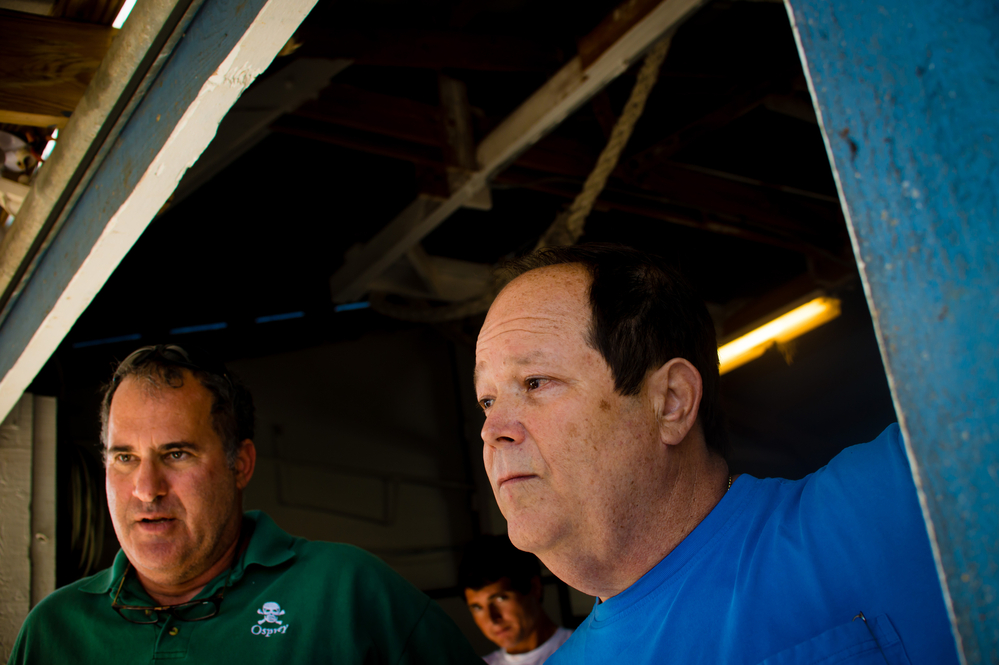
Day Boat Seafood co-owners Scott Taylor (left) and Howard Bubis watch workers unload thousands of pounds of catch from a long-line boat that was out for 10 days at their boathouse in Fort Pierce, Fla.

Chip Litherland for NPR Day Boat Seafood co-owners Scott Taylor (left) and Howard Bubis watch workers unload thousands of pounds of catch from a long-line boat that was out for 10 days at their boathouse in Fort Pierce, Fla. Day Boat Seafood co-owners Scott Taylor (left) and Howard Bubis watch workers unload thousands of pounds of catch from a long-line boat that was out for 10 days at their boathouse in Fort Pierce, Fla.

Chip Litherland for NPR

Day Boat hired MRAG Americas, a firm that has consulted with a who's who of governments and international organizations from the U.S. to New Zealand. Bob Trumble, a vice president at MRAG, says his first step was to assemble a team of four ocean specialists that included him. The MSC requires the auditors to score each fishery on a checklist of more than 30 items, designed to measure whether the fishery meets the MSC's three main principles.

The principles are designed to ensure:

— that fishing companies do not overfish (that they do not deplete the population of seafood that they are aiming to catch)

— that fishing companies protect other kinds of life in the environment

— and that each fishery is run by good managers who keep track of the latest research and adjust their methods, when necessary, to minimize their impact.

Trumble says that when MRAG's team evaluates a company, "we don't do the research ourselves." In Day Boat's case, they gathered all the studies they could find on swordfish off the Florida coast, by government and academic researchers. How fast do the swordfish reproduce? How have their numbers changed over the years? Of course, Trumble says, researchers can't count every fish in the ocean — they can only take a snapshot and then use mathematical models to extrapolate.

MRAG's auditors also pored through Day Boat's fishing records to see how its practices compared with the rest of the industry. Day Boat's owners say they assigned a staff member to work almost full time for two years, just to supply MRAG with information.

And Day Boat's owners say there was something more they had to do. The MSC rules say, in effect, that when companies are applying to be certified, they have to listen and respond to anybody who objects — including other fishing companies and environmentalists.

Learning To Compromise

Talking to environmentalists? Scott Taylor wasn't too crazy about that part. "The environmentalists would prefer no fishing whatsoever," Taylor says. "That would be their first goal, that we would go away."

"That's not true," laughs Shannon Arnold, who was then co-director of the Canada-based Ecology Action Centre. "I eat fish and I enjoy it."

But Ecology Action and several other environmental groups tried to block Day Boat's application. They cited evidence that swordfish boats in Florida accidentally kill endangered turtles.

Taylor insisted that Day Boat's crews didn't kill turtles, but he agreed to negotiate with the environmental groups over the issue — a big step for a man who sometimes talks about environmentalists with a scornful tone. And he ended up promising to make changes.

Taylor promised, among other things, that his boats would use a different kind of hook that scientists say kills fewer turtles. He pledged that within five years of being certified, Day Boat would put observers or video cameras on all of their boats, so researchers can study exactly what the company's crews catch on every fishing trip. Environmentalists have been pushing fishing companies for years to adopt that policy, usually in vain.

"We could either take the tact that we were not going to let them derail us from the way that we were going to operate," Taylor says, "or that we were going to reach across the aisle in a way that was uncommon and really unheard of."

Praise For Day Boat

In December 2011, MRAG announced that Day Boat could receive the MSC certification. And now, some of the same environmentalists who tried to block the certification praise Day Boat's owners.

"It is pretty rare to get someone from such a big industry" to compromise," says Arnold, of the Ecology Action Centre. "And I think it's a breath of fresh air."

Arnold says despite her praise, she still doesn't believe the MSC should call Day Boat's fishing methods "sustainable." So far, she says, Day Boat's owners have only promised to change their methods. "Day Boat should get certified only if and when they actually make those changes," Arnold says.

Still, she applauds the way Day Boat's owners worked with their critics. "It wasn't easy," says Arnold. "I think there was a year of some pretty contentious stuff that went on, and then they both decided, 'Let's try and work through this.' And what came out at the other end has been much better for the animals on the water, that's for sure."

Day Boat's owners say the process cost more than $200,000 — at least half for the audit company and the rest for related expenses. "It's occupied three years of our life," says Bubis. But he and his partner say the MSC label has been good for business: They have been selling their swordfish for 10 percent more than competitors who don't have it.

A 'Misleading' Label

Environmentalists say if you just heard Day Boat's story, you might conclude that the MSC is a great system. But they argue that it's deeply flawed. They say for every fishery like Day Boat, they can point to another certified fishery with major problems. So the sustainable label "is misleading," says Gerry Leape, who helps run oceans programs at the Pew Environment Group.

"The consumer looks at the fish, and says, 'Oh, it has the label on it, it must be sustainable,' " Leape says. But "in some fisheries that the MSC has certified, that's not necessarily the case."

Rupert Howes is the CEO of the Marine Stewardship Council, an international nonprofit that has pledged to promote fisheries that protect the oceans.

Phil Monckton/Courtesy of Marine Stewardship Council Rupert Howes is the CEO of the Marine Stewardship Council, an international nonprofit that has pledged to promote fisheries that protect the oceans. Rupert Howes is the CEO of the Marine Stewardship Council, an international nonprofit that has pledged to promote fisheries that protect the oceans.

Phil Monckton/Courtesy of Marine Stewardship Council

Leape says swordfish are a perfect example. The fillets labeled "certified sustainable" at the local supermarket might come from Day Boat in Florida, which environmentalists applaud. Or they might come from long-line boats in Canada, more than 2,000 miles away. The MSC has labeled those Canadian swordfish sustainable, even though many environmental groups denounce the fishery because evidence suggests its boats accidentally catch tens of thousands of sharks every year.

MSC's chief executive, Rupert Howes, staunchly defends their program. "The MSC standard is rigorous, it's science-based, and assessment is based on the evidence," he says. "The beauty of the MSC program is every year, that fishery has to have an annual surveillance audit," Howes says. "Those numbers are checked again. If new stock assessment data suggests the population can't withstand that pressure, new conditions can be invoked, or indeed certificates can be withdrawn."

But many scientists and environmentalists charge that in some fisheries, there is not enough data to conclude that they're sustainable.

Consider the buttery white fillets popularly known as Chilean sea bass. That's the usual supermarket and restaurant term for a deep-water species called toothfish, some of which are caught in the Ross Sea near Antarctica. When the MSC gave its seal of approval in 2010 to several companies that catch those fish, dozens of scientists protested.

"They do not know the most elementary things about the life cycle of this Antarctic toothfish," says Jim Barnes, director of the Antarctic and Southern Ocean Coalition, which represents dozens of environmental groups around the world. "Nobody has ever seen toothfish eggs," Barnes says. "Nobody has ever seen little baby toothfish, for that matter. And in the face of that gap, the MSC is cheerfully ready to say, 'Oh, what this fishery is doing is perfectly sustainable.' "

Critics say MSC's apparent inconsistencies stem partly from the way MSC executives have structured the system: Each fishery that wants the label has to pay a commercial auditing firm to decide whether it is sustainable, just as Day Boat hired MRAG. Sources who have worked with several audit firms, including Intertek Moody Marine, Scientific Certification Systems and Food Certification International, told NPR that the industry is fiercely competitive. There are only around a dozen auditing companies vying to get contracts to certify fisheries around the globe.

"To me, that's a direct conflict of interest," says Barnes. "What incentive does the certifying [company] have to say no?" Barnes asks. "It has no interest in doing that," he says, because then the company might scare away business from other fisheries that want the MSC's sustainable label.

Since the MSC was set up in 1997, the audit firms have certified about 200 fisheries as sustainable and rejected fewer than 10 fisheries that applied. There are now 189 certified fisheries globally.

Controversial Toothfish

Take a closer look at the controversy swirling around the Ross Sea toothfish. After the Antarctic and Southern Ocean Coalition protested, the MSC hired a respected international lawyer, Michael Lodge, to serve as a kind of referee. The MSC provides "adjudicators," as it calls them, whenever groups formally object. The process can cost tens of thousands of dollars. There have been 21 objection filings since the MSC was created. Only one certification was overturned.

Lodge's report sharply criticized the audit company that certified toothfish, Intertek Moody Marine, for some of the ways it handled the case. The "conclusion reached by [Moody's] assessment team is not supported by the evidence," Lodge wrote in one section. Part of Moody's evaluation, Lodge wrote, "can be described as arbitrary or unreasonable in the sense that no reasonable certification body" could have reached the conclusion Moody did "on the evidence before it."

"There are instances in the toothfish case when [Moody] had not been sufficiently rigorous, sufficiently careful," Lodge later told NPR. "You can call that sloppy. Certainly in those instances they were not doing their job properly," he says. "[Moody] failed to do what they were required to do as a certification body."

Moody's general manager, Paul Knapman, rejects the notion that his company's work has ever been "sloppy." Moody has certified more fisheries than any other company, according to the MSC's website. Moody gave the seal of approval to the controversial Canadian swordfish industry. "We have scientists on our team who look at the information that's been gathered," Knapman says. "It's all evidence-based. And if they say that the fishery meets the standard, then we are able to determine the fishery should be certified."

Knapman notes that despite Lodge's criticism, the MSC gave Ross Sea toothfish the sustainable label. But under the MSC rules, adjudicators like Lodge have limited options. They are not allowed to reverse a certifying company's decision even if they conclude, as Lodge did, that the company didn't properly review all the evidence. The adjudicators can rule only that the company must re-evaluate the evidence and reconsider its original decision. That is what Lodge ordered Moody to do. Moody's auditors reached the same conclusion as they did the first time and labeled the fishery sustainable.

The MSC's Howes is nonplussed when he hears about controversies swirling around some of the fisheries. "Yes, there are controversial fisheries; there are bound to be," he says. "We have nearly 300 fisheries from pretty much every ocean in the world either assessed or under assessment. I'm confident in the MSC program and its assessment process. No system is perfect."

Environmental groups and others have filed 21 official objections since the MSC was created. So does that low number suggest that environmentalists endorse most MSC-labeled fisheries? Many environmentalists we talked to say no.

Barnes, Leape and others say that they have not filed many objections mainly because they do not have enough staff, money or time. Directors of Canada's Ecology Action Centre, for example, say that fighting the decision to certify Canadian swordfish diverted them from working on other priorities, and soaked up "literally thousands of volunteer hours" of research.

"The outcome is almost the same as if we'd done nothing," Fuller says. So she and her colleagues have decided not to file any more objections with the MSC. Of course, the objections are not a burden only for environmental groups. They cost time and money for fishing companies and their audit firms, too.

Conflicts Of Interest Among Certifiers?

A few years ago, leaders of the Pew Environment Group became so concerned about potential problems in the MSC system that they hired an outside lawyer to investigate. Attorney Stacey Marz's confidential report for Pew, which NPR obtained, warned "there will always be suspicions about the independence of certifiers when they are paid by those they are assessing."

The attorney recommended that the MSC or other groups set up a central fund, which fisheries would pay when they apply to be certified. Then the fund's overseers would decide which auditing firm should evaluate which fishery — preventing fishing company executives from handpicking and paying the firm that decides their fate.

Knapman, Moody's general manager, dismisses concerns about potential conflicts of interest. He says Moody, which has certified more fisheries than any other audit company, hires different teams of independent experts to evaluate each fishery. "They are by and large academics who have their own reputations, are established in their field. Those individuals certainly are not thinking long term about repeat work. The focus is on the fishery. Ultimately it's their reputation which is at stake."

Howes, MSC's chief executive, says the system of allowing companies to choose and pay the auditing firms that evaluate them is "the way that our global market-based corporations operate." He notes that many corporations, in industries from banking to manufacturing, routinely choose and pay independent auditing firms to evaluate the way they do business.

The MSC has extensive "checks and balances to assure that the accreditor does do a thorough job," Howes says. "If an audit firm got a reputation for doing a bad job in its certifications," he adds, "I suspect they would lose an awful lot of business, very, very quickly."

Howes sees the growing criticism of the MSC as evidence that the system is working well. "This was a fantastic idea. We've learnt by doing."

He later continues: "Part of the success of the program is, we're a broad church," he says. "We're very involved with all of our stakeholders, and many of them are very critical of some of the assessments. Most of the people who criticize the program, I think, are completely committed to an organization like the MSC existing. They see us as part of the solution. But it is their role to keep testing us, to keep pushing us, whether it's on the industry side or the NGO side, to get better at what we're doing."

Researcher Barbara Van Woerkom contributed to this story.

View the original article here

Pig Manure Reveals More Reason To Worry About Antibiotics

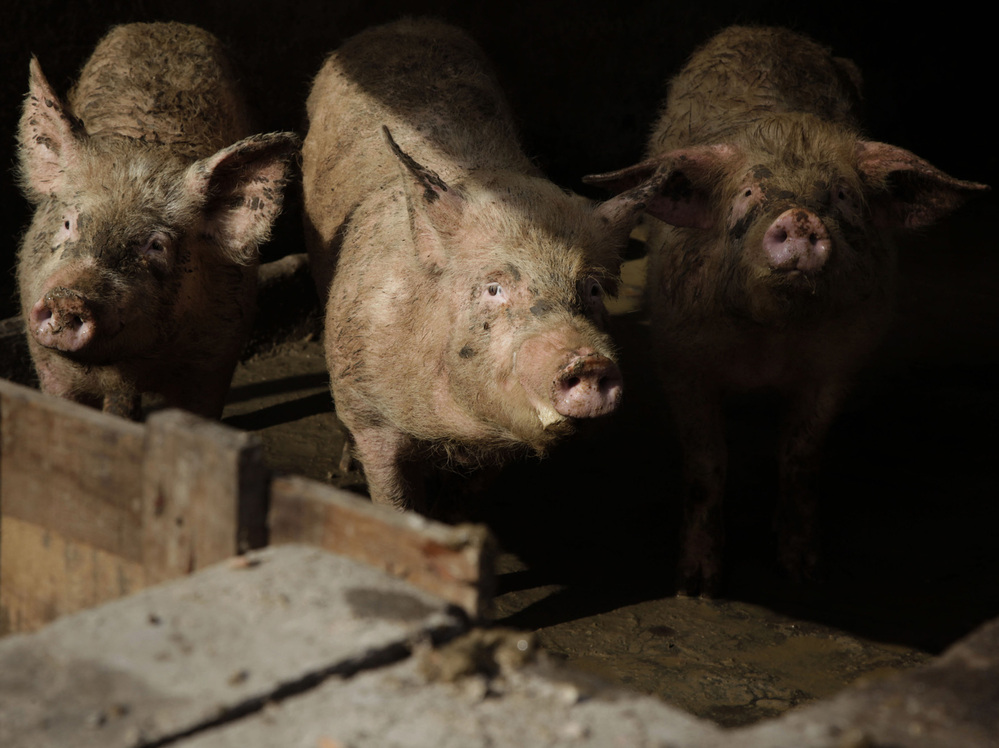
Pigs at a farm in Beijing peer out at visitors. Half of all the pigs in the world live in China.

Ng Han Guan/AP Pigs at a farm in Beijing peer out at visitors. Half of all the pigs in the world live in China. Pigs at a farm in Beijing peer out at visitors. Half of all the pigs in the world live in China.

Ng Han Guan/AP

There's a global campaign to force meat producers to rein in their use of antibiotics on pigs, chickens and cattle. European countries, especially Denmark and the Netherlands, have taken the lead. The U.S. is moving, haltingly, toward similar restrictions. Now the concerns about rampant antibiotic use appear to have reached China, where meat production and antibiotic use have been growing fast.

Half of all the pigs in the world live in China — a consequence of the country's swelling appetite for pork. And like pork producers in many other countries, Chinese farmers have turned to antibiotics and other feed additives to control disease in their herds and also to make the animals grow faster.

The exact extent of antibiotic use in Chinese agriculture is unknown, because authorities don't monitor it. But researchers have sometimes found disturbingly high levels of antibiotic residues in manure from Chinese pig farms.

A study published Monday by the Proceedings of the National Academy of Sciences adds to evidence that antibiotic use by Chinese pork producers poses health risks. According to the study, manure from pig farms doesn't just contain antibiotic residues. It also carries high concentrations of bacteria that are resistant to antibiotics. This increases the risk that antibiotic resistance will move into bacteria that infect humans, and the resulting diseases will be more difficult to treat.

But there's also good news. Scientists from the Chinese Academy of Sciences, who took the lead in the new study, are increasingly aware of the problem and looking for ways to fight it. They invited James Tiedje, a microbiologist from Michigan State University, to join their effort.

"They were quite forthcoming," Tiedje tells The Salt.

The Chinese scientists monitored antibiotic residues in manure from three different pig farms. They found plenty, but not at exceptionally high levels.

Tiedje then tested those manure samples, looking for genes that make bacteria resistant to particular antibiotics. That's when he hit the jackpot: He found more than 100 different resistance genes. The concentration of resistance genes was almost 200 times higher in these samples, compared to manure from a pig farm that had never used antibiotics.

"We're not trying to single out the Chinese here. This is a global problem," says Tiedje. Similar levels of antibiotic residues, for instance, have been found in manure on European farms.

The study indicates that treating the manure after it leaves the farm can significantly reduce the potential for this manure to spread antibiotic resistance to other bacteria in the surrounding environment. Composting it, for instance, cuts the total population of microbes in manure – which means fewer microbes carrying antibiotic resistance genes.


View the original article here

Valentine's Day Chemistry

Valentine's Day Flowers and Candy (Andrea ChurchRomance is all about chemistry, right? Valentine's Day is February 14th, so you've still got time to find a great gift for your sweetie and impress him or her with your holiday knowledge. Here's some Valentine's Day chemistry content to help you out: Vanishing Valentine Demo - Make a chemical solution go from blue to pink to clear. Hot and Cold Valentine - A chemical solution goes from colorless to hot pink! Crystal Heart - Grow a crystal heart as a decoration or gift. Gallium Beating Heart - It's like the mercury beating heart chemistry demo, except it's not toxic! How Mood Rings Work - Can a mood ring tell if you're feeling passion? Gifts Science Geeks Can Make - Hint: fizzy baths bombs tend to be a better gift for this particular holiday than glow-in-the-dark slime. Of course, colored fire is good for every holiday... Is There really a 'Chemistry of Love'? - If you don't know the answer, then this FAQ is for you. Make Colored Flowers - Flowers are a traditional Valentine's Day gift. You can color your flowers for your Valentine yourself. Make a Floral Preservative - Keep your Valentine's Day flowers beautiful longer. Actually, there are many easy recipes for making cut flower preservative. Paper Chromatography with Flower Petals - Unless you're giving silk flowers, they won't last forever, even if you use a floral preservative. If your Valentine is into chemistry, then include instructions for how to separate out plant pigments with your roses in addition to a sweet card. Make Perfume - Perfume is a romantic gift. If you apply your command of chemistry, you can make a signature scent, which is a personal and meaningful gift. Jacobson's Organ & the Sixth Sense - Do humans respond to pheromones? Chemistry of Diamond - Learn about the properties of this popular gift choice. Grow a Silver Crystal - Are you up for a challenge? A silver crystal dangling from a silver chain is a thing of beauty. It takes some time and skill to grow a large crystal, so if this is something that interests you, start growing your crystal early. Jewelry Chemistry - Learn about crystals, gems, and precious metals. Theobromine Chemistry - Chocolate is the 'food of the gods' (and well-liked by Valentine goddesses, too). if(zs>0){if(zSbL250)gEI("spacer").style.height=Math.floor(e[0].height/12)+17.5+'em';else{var zIClns=[];function walkup(e){if(e.className!='entry'){if(e.nodeName=='A'||e.style.styleFloat=='right'||e.style.cssFloat=='right'||e.align=='right'||e.align=='left'||e.className=='alignright'||e.className=='alignleft')zIClns.push(e);walkup(e.parentNode)}}walkup(e[0]);if(zIClns.length){node=zIClns[zIClns.length-1];var clone=node.cloneNode(true);node.parentNode.removeChild(node);getElementsByClassName("entry",gEI("articlebody"))[0].insertBefore(clone,gEI("spacer"))}}}};zSB(2);zSbL=0

View the original article here

The Egg Makes Its Move In A New Version Of Which Came First: The Chicken Or the Egg?

Which came first? I just bumped into a new take on this old puzzler.

Let there be chickens! Robert Krulwich/NPR

Everybody knows you need a chicken to lay an egg. Everybody knows you need an egg to produce a chicken. What nobody knows is how the cycle started. Once upon a time, did Heaven create a first-of-its-kind egg, or a first-of-its-kind chicken? (Or to put the question in a more sciencey way, did a new, different egg make a sudden appearance? Or did it start with new and different chicken?)

Let there be eggs! Robert Krulwich/NPR

This, of course, is a slippery question. But in this new video from AsapSCIENCE, instead of getting all philosophical, Mitchell Moffit gets cleverly technical.

He asks, "Is a chicken egg one laid by a chicken or only one that simply contains a chicken?"

Yes, I had to read this a few times to make sense of it. What he's saying is, a long, long, time ago, an animal looking a lot like a chicken (It was genetically very, very close, but not quite there; we'll call it a "proto-chicken.") laid an egg. An animal resembling rooster had fertilized that egg, but when dad's genes and mom's genes fused, they combined in a new way, creating a mutation that accidently made the baby different from its parents. While it would take thousands of years and generations to notice the difference, that egg was different enough to become the pioneer of a new species, an animal we now call ... A Chicken. So if we look at that first egg, created by accident from two almost-chickens — couldn't we say it all started with a new and different egg?

So it's the egg! The egg came first? No?

Now you are ready to watch the video ...

AsapSCIENCE is the brainchild of Mitchell Moffit and Gregory Brown, two former University of Guelph classmates from Ontario who regularly produce three minute videos answering questions that normal people with no science training ask themselves while staring out windows on long train trips.You can find their YouTube channel here.


View the original article here

Monday, February 11, 2013

To Infinity And Beyond: Would-Be Astronauts Keep Faith In Uncertain Era

A child poses for a picture in front of an astronaut space suit at the Kennedy Space Center on the eve of the launch of Space Shuttle Endeavour July 14, 2009 in Cape Canaveral, Fla.

Chip Somodevilla/Getty Images A child poses for a picture in front of an astronaut space suit at the Kennedy Space Center on the eve of the launch of Space Shuttle Endeavour July 14, 2009 in Cape Canaveral, Fla. A child poses for a picture in front of an astronaut space suit at the Kennedy Space Center on the eve of the launch of Space Shuttle Endeavour July 14, 2009 in Cape Canaveral, Fla.

Chip Somodevilla/Getty Images

Space exploration has stirred imaginations and piloted hopes and dreams, but the future of space travel looks very different from the age in which Neil Armstrong made it to the moon.

Since NASA is no longer doing manned missions, astronaut hopefuls have turned their sites on the private sector.

Private Adventurism

Elon Musk, CEO of Tesla Motors and SpaceX, is one example of space entrepreneurship. He's been investing in private rockets and spaceships, leading two missions to the International Space Station in 2012.

Richard Branson, the owner of Virgin Airlines, has founded a private space company of his own called Virgin Galactic. He says he hopes to open a spaceport in New Mexico for tourists later this year. He'll offer a six-minute, weightless ride into space.

A slew of other private companies are building and testing spaceship prototypes to carry people and cargo, all in the hopes that space exploration will be profitable.

John Grunsfeld, a retired astronaut and associate administrator for science at NASA, says this is all just as it should be. He says it's a natural evolution — a sort of seed company spinoff from NASA.

"The reason they're successful is because we've had 50 years of investment in learning how to explore space," he tells NPR's Jacki Lyden.

The technology that's been developed over the years by NASA is now being used in the private sector.

"When they are successful, it will make our space program stronger and also provide an economic engine for the country," Grunsfeld says.

Eyes On The Stars

For astronaut-hopeful Brian Shiro, these private companies may be his best hope of getting off Earth. Shiro, 34, has wanted to be an astronaut since he went to space camp in middle school. The geophysicist has the skills: math, science, multiple marathons.

He's invested all his vacations and free time to training, and he has a blog, Astronaut for Hire. He's even experienced zero gravity in a centrifuge in a NASA-sponsored training exercise.

He has applied twice to be a NASA astronaut, but last week he found out he once again didn't make the cut. He's not worried; he intends to become an astronaut with or without NASA. Shiro says he's ready at a moment's notice.

"If you need an astronaut, I'm here," he says.

Record-breaking former astronaut Michael Lopez-Alegria says Shiro shouldn't get discouraged. Lopez-Alegria spent seven continuous months in orbit and has done more spacewalking than any other human being. It's not a moment you can relive, he says.

"It's almost like a different dimension, like a dream," he says.

Although he had to meet very specific education requirements to be an astronaut with the government, he expects the opportunity will open up to people with all kinds of expertise.

'Inspiring' Work

As Shiro and others look for private-sector opportunities, NASA is shifting its focus, too. The agency's role, says NASA administrator Grunsfeld, is to keep undertaking things like the Hubble Telescope, Mars rovers and other big-concept ideas.

"What we do at NASA is inspiring. It's reaching, it's visionary, and it inspires people on Earth to try hard things," he says. "I think it's really a sign of great American strength that we do invest the money we do in technology, in these hard projects, in NASA."

That investment isn't what it used to be, though.

"Last year, they did take a hit. They had a relatively flat budget of $17.7 billion — that was still $59 million less than what they got in 2012," says Tariq Malik, managing editor of SPACE.com.

NASA had to take hundreds of millions of dollars out of its planetary science projects, he says.

"And this is in a year when they had a spectacular success: They landed the biggest robot on Mars that can move around, the Curiosity Rover," Malik says.

A budget of $17.7 billion may sound huge, but Grunsfeld says it isn't, really.

"Our country ... invests a tiny fraction of 1 percent in NASA, and this is what's so amazing to me," he says, "is with that small investment, we do so much for the country."

Forget The Moon

President Obama has re-conceived the next big space push: sending astronauts to visit an asteroid by 2025, and then to possibly try for Mars in the mid-2030s. Malik says he thinks visiting an asteroid is gutsy.

"Everyone can see the moon at night. When Obama took office, he scrapped that plan ... to trade with this asteroid one, which they hope will capture the imagination of folks more because it's never been done before," he says.

Malik points out that space exploration is still wildly popular with the public. Last year, NASA got more applicants for the next astronaut training class than ever before. That class will be announced this spring.


View the original article here

U.S. Natural Gas Exports Stir Debate

There are several dimensions to the booming energy market. Steve Inskeep talks to Sarah Ladislaw, of the Center for Strategic and International Studies, about energy market trends.


View the original article here

Is The Earth Cooking Up Another Super Volcano?

A hot spring at Yellowstone National Park. The super volcano that lurks below Yellowstone has blown its top three times in the past 2 million years.

Jason Maehl A hot spring at Yellowstone National Park. The super volcano that lurks below Yellowstone has blown its top three times in the past 2 million years. A hot spring at Yellowstone National Park. The super volcano that lurks below Yellowstone has blown its top three times in the past 2 million years.

Jason Maehl

Every few million years or so, the Earth burps up a gargantuan volcano.

These aren't like volcanoes in our lifetimes; these "super volcanoes" can erupt continuously for thousands of years. While they might be rare, you'd best look out when one hits.

The ash and volcanic gases from these volcanoes can wipe out most living things over large parts of the planet. Michael Thorne, a seismologist at the University of Utah, has some clues about what causes these big eruptions.

Thorne uses seismic waves to get a picture of what's going on about 1,800 miles beneath the Earth's surface, where the planet's core meets the outer mantle. Think of the Earth as an avocado, and the pit is the core. The stuff you make guacamole with is the outer mantle.

Thorne has been watching two enormous piles of rock that sit on the boundary between the core and the mantle. One pile is underneath the Pacific Ocean; the other under Africa.

Scientists have known about them for 20 years, but Thorne saw something different.

"I think this is the first study that might point to evidence that these piles are moving around," Thorne says.

Moving perhaps, but slowly, and the piles are maybe 3,000 miles across. Thorne thinks, in fact, that the pile under the Pacific is actually two piles crushing up against each other. And where they meet, there's a blob.

"We call it a blob of partially molten material," he says. "I mean it's big ... this one that we found is an order of magnitude, maybe 10 times larger, than any of the ones we've observed before."

The blob is the size of Florida, and there are other, smaller blobs around the edges of the piles, too.

So these great rock piles are being squished together and squeezing this huge molten blob at the middle of it like some kind of balloon, and it is going on right underneath us.

Or at least, under Samoa. So should we care about these blobs?

"A possibility is that these blobs might represent sort of a deep-seated root, to where plumes arise all the way to the surface, giving rise to hot-spot volcanism," Thorne says.

One example is the Yellowstone super volcano, which has blown its top three times in the past 2 million years.

Thorne published all this in the journal, Earth and Planetary Science Letters. He's rather calm about it, and says it is a slow process from blob to blowout — maybe 100 million years or so.

Thorne says he has no plans to move just yet.


View the original article here